

Artificial intelligence is transforming how advertisements are designed, enabling marketers and creatives to produce visually compelling ads more efficiently. However, leveraging AI effectively requires understanding key design principles and decision criteria to ensure ads capture attention and drive results. This guide shares top AI ad design tips to help you create eye-catching advertisements that resonate with your audience while maintaining brand integrity.
Problem framing
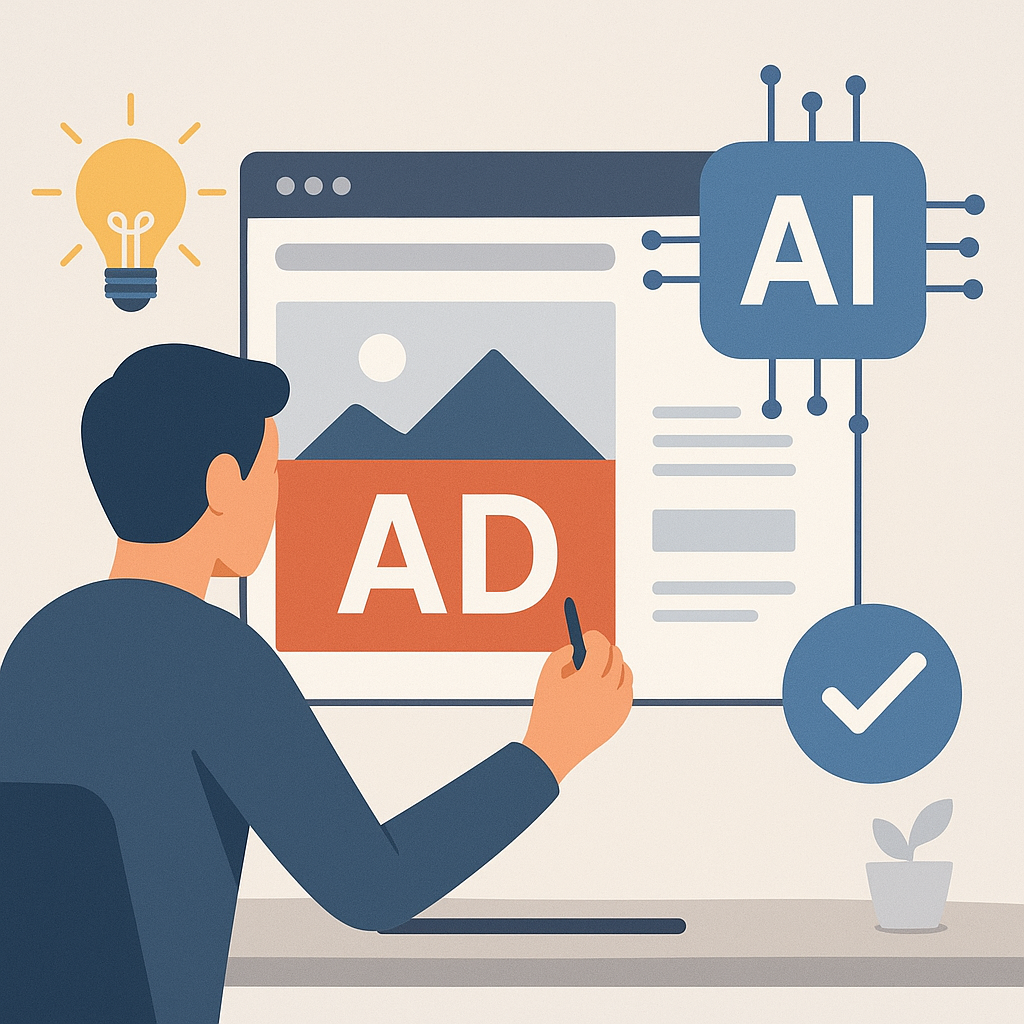
Designing advertisements that stand out in a crowded digital landscape is increasingly challenging. While AI tools can generate creative assets quickly, without strategic guidance, ads may lack cohesion, relevance, or brand consistency. The problem is how to harness AI's power to create visually appealing ads that effectively engage target audiences and achieve marketing goals without sacrificing quality or brand identity.
Decision criteria
When using AI for ad design, key decision criteria include: 1. Visual appeal: Does the ad attract attention and communicate the message clearly? 2. Brand consistency: Are colors, fonts, and style aligned with brand guidelines? 3. Audience relevance: Is the creative tailored to the target demographic and platform? 4. Message clarity: Does the ad copy complement the visuals and convey the intended call to action? 5. Optimization potential: Can the AI-generated ad be tested and refined based on performance data? Balancing these criteria ensures AI-generated ads are both creative and effective.
Execution path
Start with clear objectives and audience insights to guide AI-generated designs.
Use AI tools to generate multiple ad concepts quickly, experimenting with images, layouts, and copy.
Evaluate AI outputs against brand guidelines to ensure consistency and appropriateness.
Refine selected designs manually to add human creativity and polish.
Conduct A/B testing of AI-generated ads to identify top performers.
Analyze performance data to optimize and iterate ad creatives continuously.
Integrate AI design workflows with your existing marketing platforms for seamless campaign management.
Maintain a feedback loop between human designers and AI tools to improve output quality over time.
Edge cases
AI ad design may struggle with highly nuanced or culturally sensitive campaigns where human judgment is critical. In scenarios requiring complex storytelling or emotional appeal, AI-generated visuals might lack depth or authenticity. Additionally, brands with highly unique or evolving identities may find AI templates too generic, necessitating more customized human input. Understanding these edge cases helps marketers decide when to rely on AI and when to prioritize human creativity.
Common mistakes
Overreliance on AI-generated designs without human review leads to generic or off-brand ads because AI lacks contextual understanding.
Ignoring brand guidelines in AI outputs causes inconsistent messaging which results in weakened brand recognition.
Skipping audience testing for AI ads leads to poor engagement since assumptions replace data-driven insights.
Using AI tools without optimizing for platform-specific formats causes ads to underperform due to poor user experience.
Neglecting to update AI training data or prompts results in outdated or irrelevant creatives that fail to connect with current trends.
Conclusion
AI ad design works best when combined with strategic human oversight, clear brand guidelines, and ongoing optimization based on real-world data. It fails when marketers treat AI as a fully autonomous solution without critical evaluation or adaptation. By following practical AI ad design tips—such as maintaining brand consistency, testing creatives, and integrating AI thoughtfully into workflows—you can create eye-catching advertisements that engage audiences and drive marketing success in a rapidly evolving digital landscape.